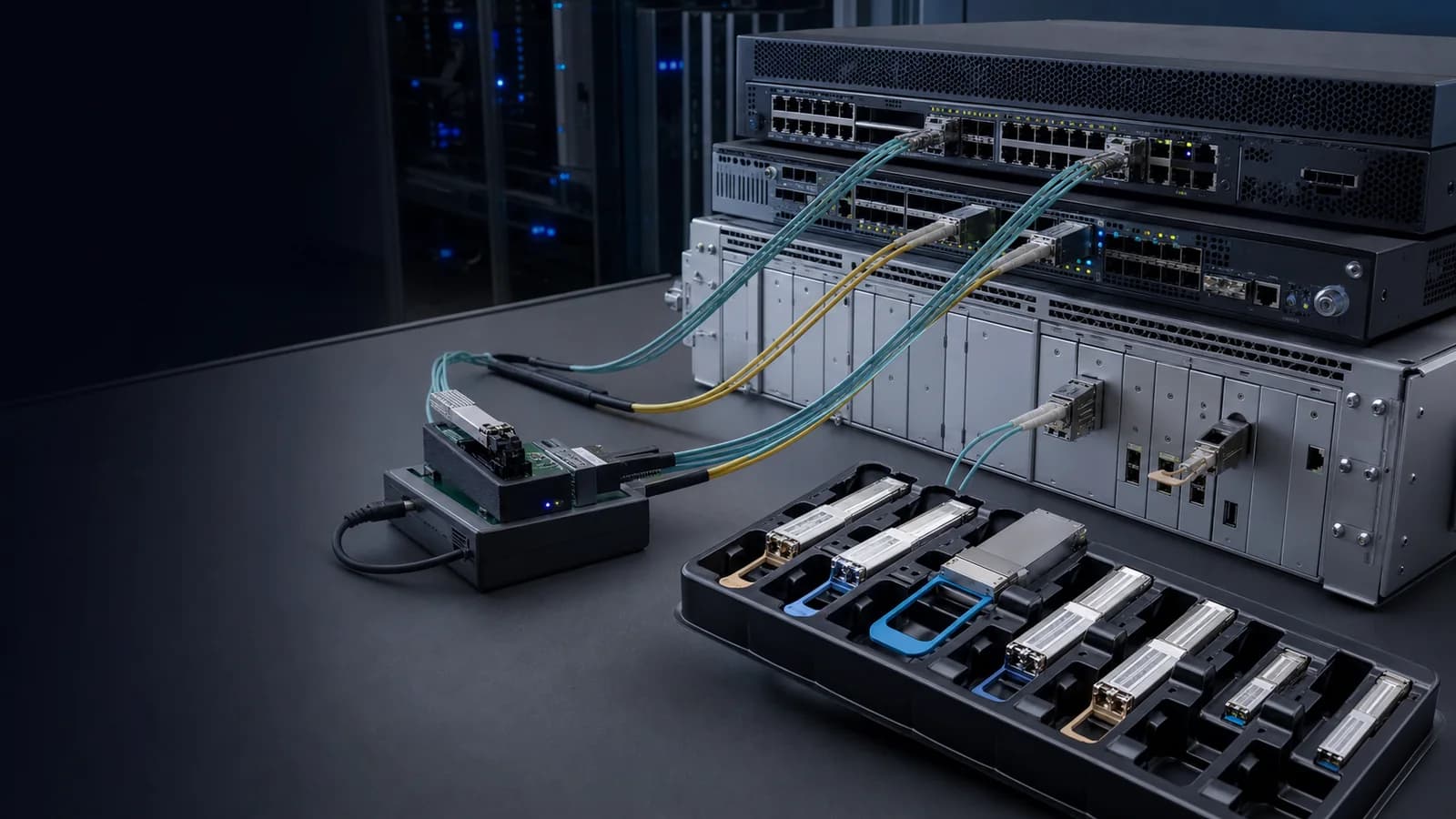
10/100M MEDIA CONVERTER

10/100M Duplex Fiber Media Converter 850nm 550m SC/ST/FC MMF | FLD-MC-ASM-DU-MM-1 | Fiberland

Rate10/100MReach550mWavelength850InterfaceSC/ST/FC
Fiberland part number
FLD-MC-ASM-DU-MM-1
Unit priceAsk Our Manager

Key Specifications

Select a specification to see how it affects model selection.

View complete table
Form TypeDuplex

Check this recorded value against the target device and project requirements before quotation approval.

Technical Specifications

Filter the product record by the information needed for engineering or purchasing review.

14 specifications shown
Fiberland Part NumberFLD-MC-ASM-DU-MM-1Vendor NameFIBERLAND
Data Rate10/100MWavelength850
Reach550mForm TypeDuplex
Optical InterfaceSC/ST/FCDDM SupportIron
Commercial Temp.0~70℃Industrial Temp.N/A
Compatible BrandsEURO/UK/US/AUSComplianceCE,FCC,ROHS,REACH
Warranty3 YearsModeMM

Product Compatibility Mapping

Cross-reference the original manufacturer part number with the corresponding Fiberland part number before confirming the target device and firmware.

Search Full Compatibility Database

No verified part-number mapping is linked to this product yet.

Send the target device brand, model, firmware or OS and port details for an exact compatibility review.

A part-number cross-reference is a model-selection starting point, not a blanket device guarantee. Final fit depends on the exact device, firmware or OS, target port and requested coding profile.
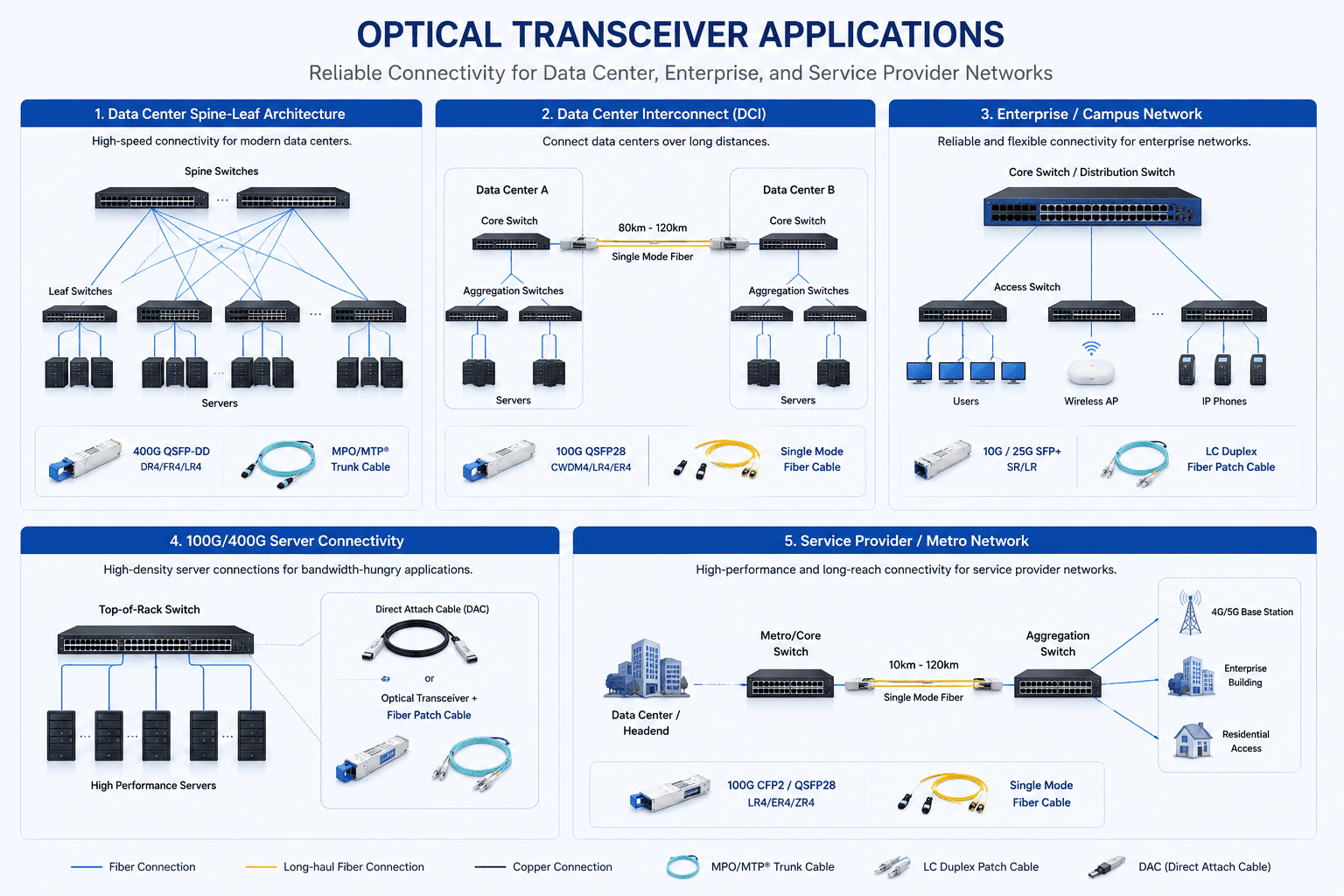
See Where This Product Fits in the Network

Review common data-center, DCI, campus, server and metro-network connections before confirming speed, reach, fiber type and connector.

Application planning

Optical Transceiver Application and Link Map

Compare representative network topologies and link paths to identify the appropriate product family for the intended deployment.

View full application diagram
Optical transceiver application diagram covering data center, DCI, campus, server and metro networks

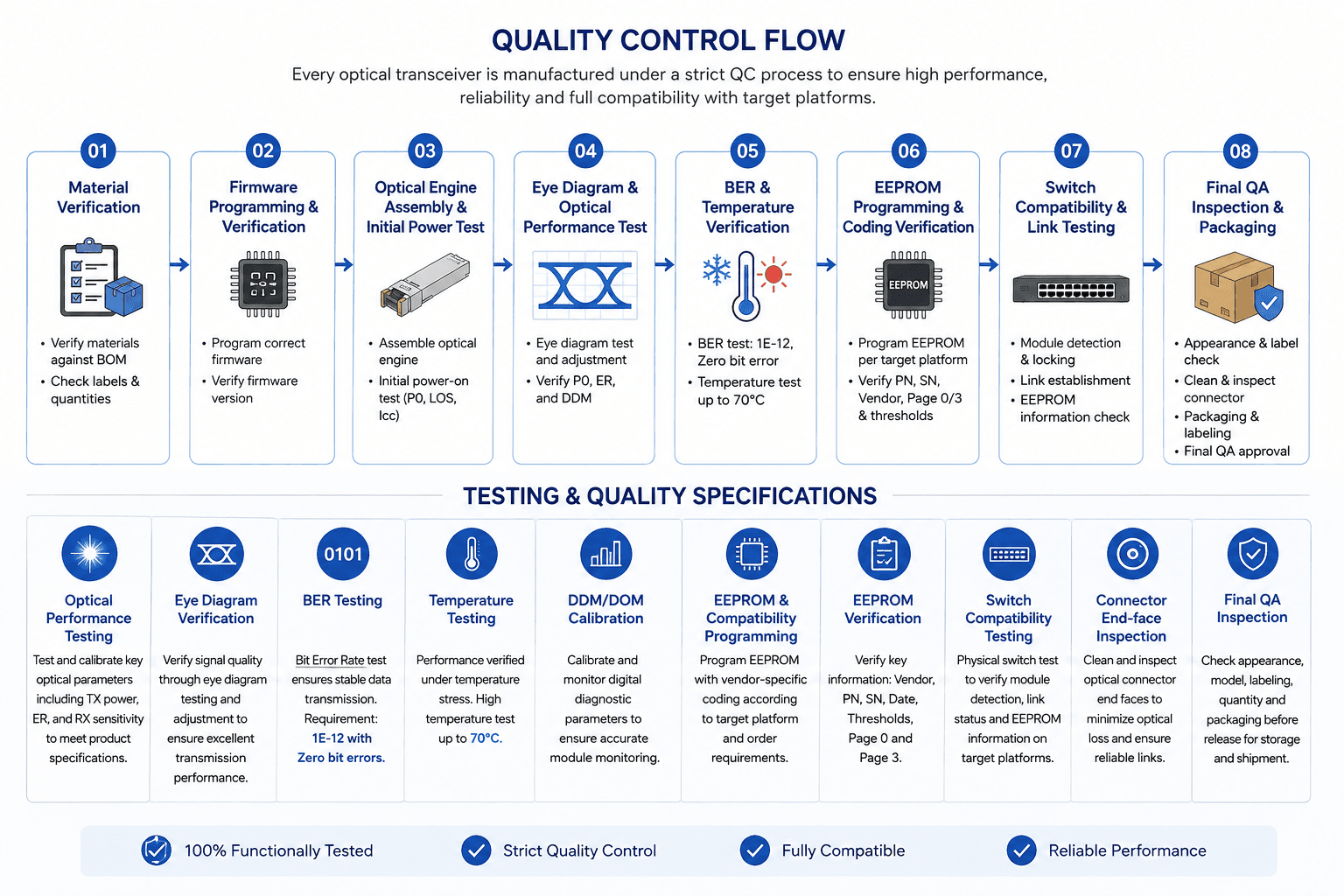
Review the Quality-Control and Test Flow

Follow the checkpoints used to verify materials, firmware, optical performance, temperature stability, compatibility and final inspection.

Testing and quality

Quality Control and Test Flow

Review the sequence from material verification and firmware programming through optical, temperature, compatibility and final QA inspection.

View full testing diagram
Quality control flow covering material, firmware, optical, temperature, compatibility and final QA checks

Frequently Asked Questions

Answers to common compatibility, installation and troubleshooting questions.

Are compatible transceivers suitable for data centers?

Yes. Compatible optical modules are widely used for server, switch, storage, and data-center interconnect applications when the correct interface and compatibility requirements are met.

How is a transceiver made compatible with a specific switch brand?

Compatibility is typically achieved through EEPROM programming, identification parameters, interface compliance, and platform-specific coding so that the host device can correctly recognize and communicate with the transceiver.

How should I troubleshoot a transceiver that is recognized but has no optical link?

Check transmit and receive power, fiber polarity, connector cleanliness, wavelength, fiber type, link distance, FEC configuration, port speed, and the specifications of the transceiver at the opposite end.

What is EEPROM coding in an optical transceiver?

EEPROM coding stores identification and operating information such as vendor data, part number, wavelength, interface characteristics, and other parameters read by the host equipment.

Why does my compatible transceiver keep losing and restoring the link?

Intermittent links can be caused by marginal optical power, dirty connectors, unstable fiber connections, FEC mismatches, port configuration, temperature, or compatibility issues. Check both the optical link and host-side configuration.

Tell Us What Your Project Needs

Engineering resources

Technical proof for faster project review

Move from model selection to internal approval with the documents, compatibility checks and verification paths buyers use most.