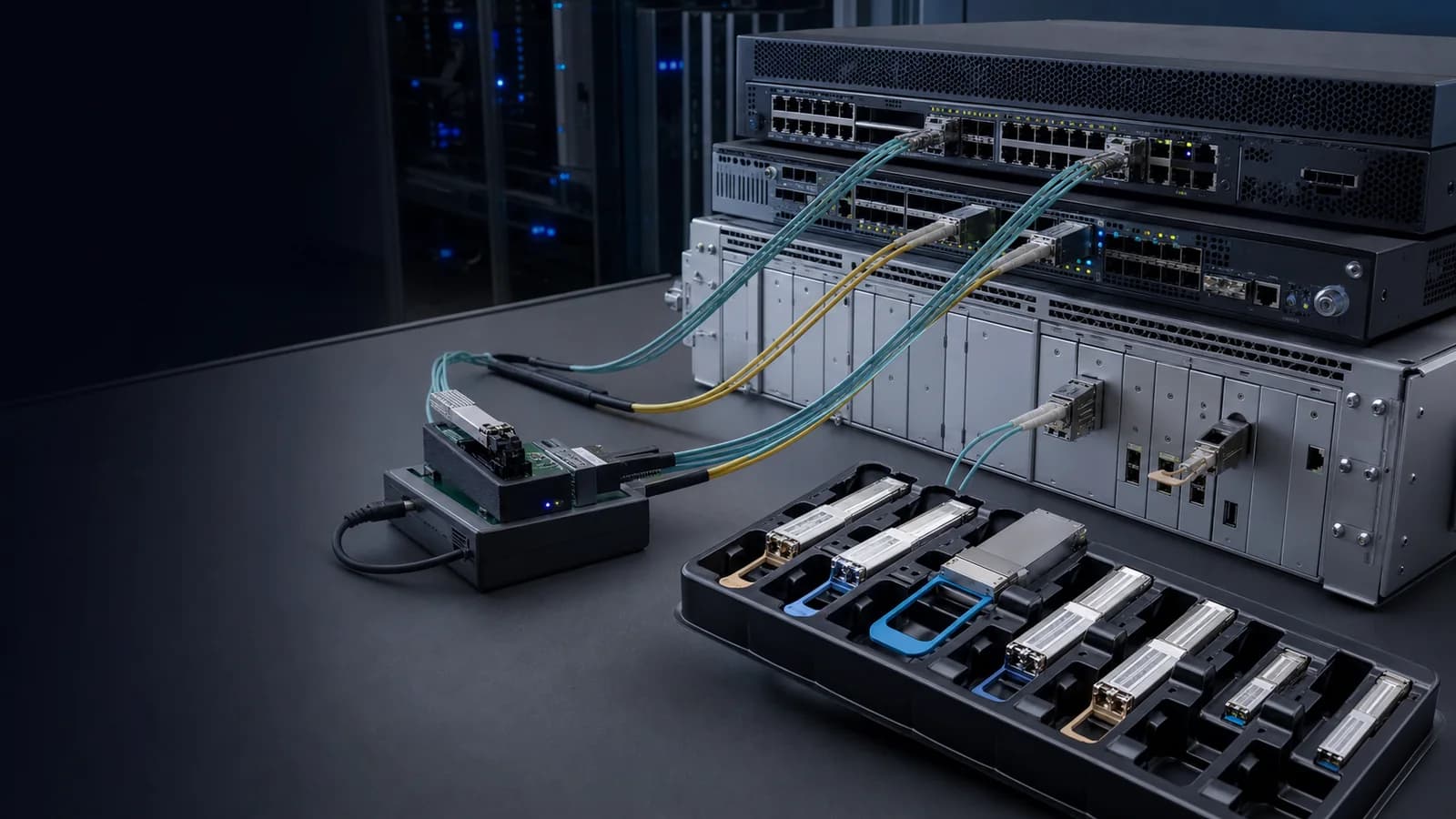
10G SFP+ Transceivers

SFP-10G-SR-A,Arista compatible SFP+,10GBASE SR SFP+ transceiver MMF, 850nm 300M

Rate10GbpsReach300mWavelength850nmInterfaceLC
Fiberland part number
FLD-SFP-10G-SR-A

Key Specifications

Select a specification to see how it affects model selection.

View complete table
Form TypeSFP+

Check this recorded value against the target device and project requirements before quotation approval.

Technical Specifications

Filter the product record by the information needed for engineering or purchasing review.

14 specifications shown
Vendor NameFiberlandForm TypeSFP+
Data Rate10GbpsWavelength850nm
Reach300mOptical InterfaceLC
Media TypeMMDDM SupportYES
Commercial Temp.0~70℃Industrial Temp.N/A
Compatible BrandsAristaCertificatesCE,FCC,ROHS,REACH
HS Code8517706000Warranty3 Years

Product Compatibility Mapping

Cross-reference the original manufacturer part number with the corresponding Fiberland part number before confirming the target device and firmware.

Search Full Compatibility Database

No verified part-number mapping is linked to this product yet.

Send the target device brand, model, firmware or OS and port details for an exact compatibility review.

A part-number cross-reference is a model-selection starting point, not a blanket device guarantee. Final fit depends on the exact device, firmware or OS, target port and requested coding profile.
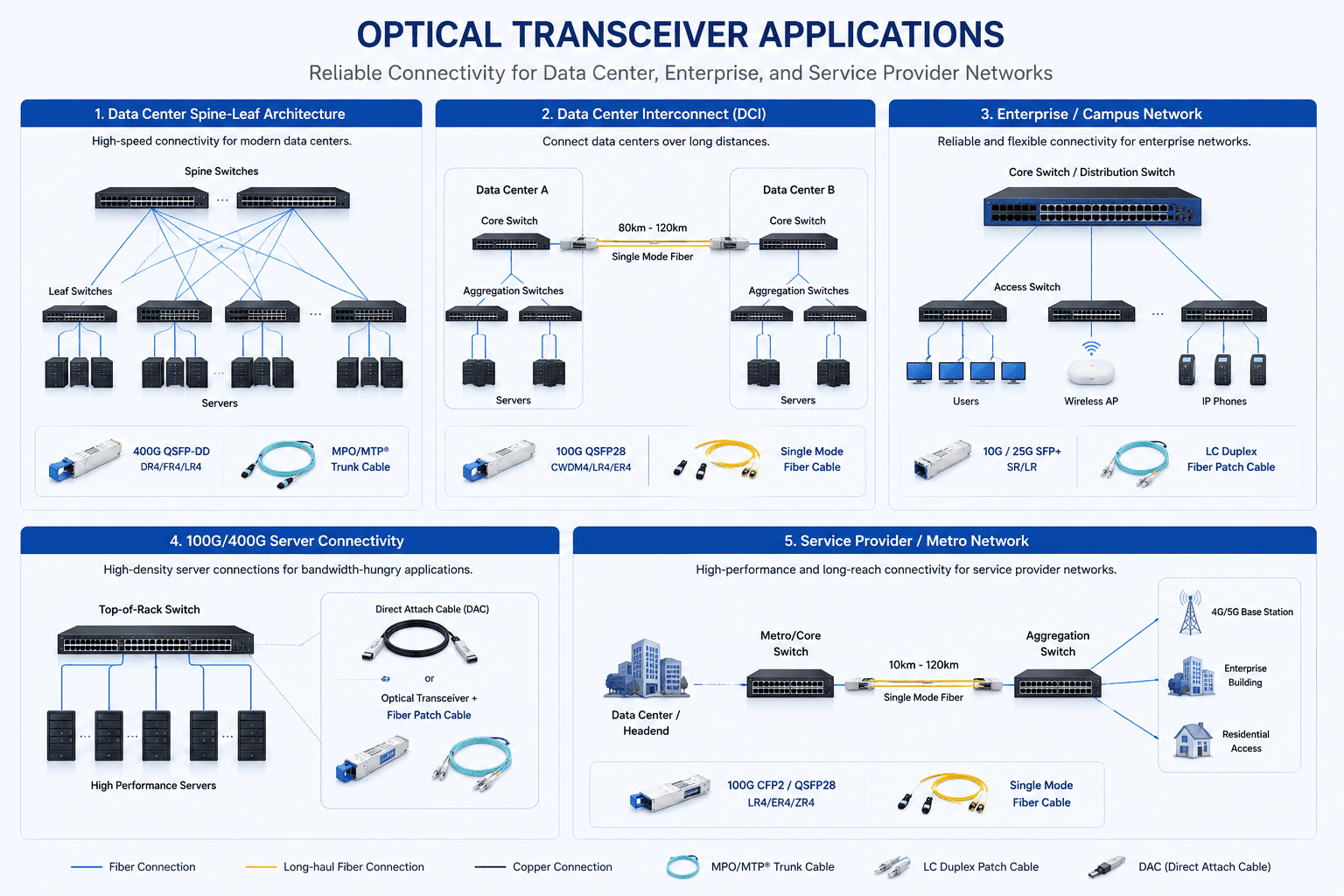
See Where This Product Fits in the Network

Review common data-center, DCI, campus, server and metro-network connections before confirming speed, reach, fiber type and connector.

Application planning

Optical Transceiver Application and Link Map

Compare representative network topologies and link paths to identify the appropriate product family for the intended deployment.

View full application diagram
Optical transceiver application diagram covering data center, DCI, campus, server and metro networks

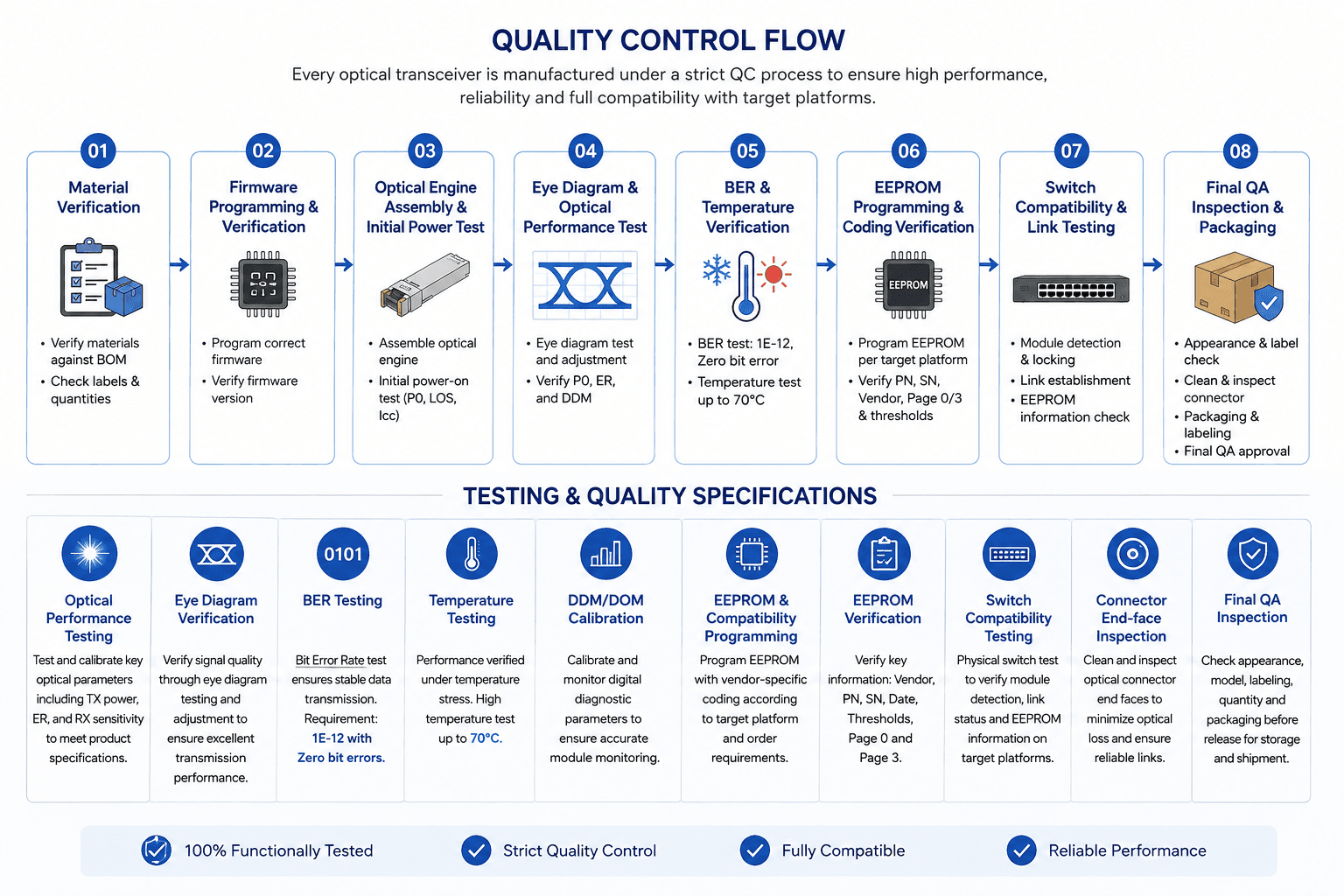
Review the Quality-Control and Test Flow

Follow the checkpoints used to verify materials, firmware, optical performance, temperature stability, compatibility and final inspection.

Testing and quality

Quality Control and Test Flow

Review the sequence from material verification and firmware programming through optical, temperature, compatibility and final QA inspection.

View full testing diagram
Quality control flow covering material, firmware, optical, temperature, compatibility and final QA checks

Frequently Asked Questions

Answers to common compatibility, installation and troubleshooting questions.

Why does my compatible transceiver show low RX optical power?

Low receive power can result from excessive fiber loss, dirty connectors, damaged fiber, excessive link distance, incorrect wavelength pairing, or insufficient transmit power from the remote transceiver. Compare the measured RX power with the module's specified receiver range.

Can compatible transceivers be used with existing fiber cabling?

Yes, provided the module's fiber requirements match the installed cabling, including single-mode or multimode fiber, connector type, wavelength, and supported transmission distance.

Can different transceiver brands be used at opposite ends of a fiber link?

Yes. The transceivers do not normally need to be from the same manufacturer. Their Ethernet standard, wavelength, fiber type, lane configuration, reach, and other link requirements must be compatible.

How do I find a compatible transceiver for an OEM part number?

Search using the OEM part number and verify the form factor, data rate, wavelength, transmission distance, connector, fiber type, and host-platform compatibility.

Why does the switch report a vendor or part number different from the physical transceiver label?

Compatible transceivers may contain programmed identification information required by the host platform. The vendor or part number reported by the switch can therefore differ from the manufacturer's physical product label.

Tell Us What Your Project Needs

Engineering resources

Technical proof for faster project review

Move from model selection to internal approval with the documents, compatibility checks and verification paths buyers use most.